
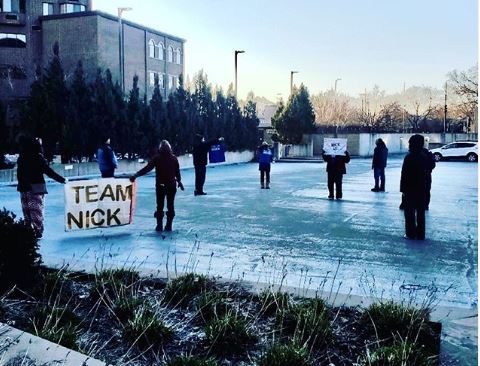
 Due to COVID-19, visitors are restricted in cancer centers, but that didn't stop this crew of family and friends of one of our patients from finding a creative way to show their love and support for our patient when he arrived for chemotherapy today. Our St. Paul Cancer Center practice administrator, Julie Tyren, shared this heartwarming photos, videos and story from the morning of April 15:
"Our patient, Nick McDonough, came in for his chemo treatment today and was greeted by a surprise group of his family! They were spread out (and appropriately physically distanced from one another) around the parking lot to show him support and love! They cheered, had signs that read “Team Nick” and were there in a show of physical, mental and social support as he entered the clinic under our visitor restrictions. He was in tears, our staff were in tears and we were all so touched by the thoughtful, creative ways our patients get support through these trying times. THANK YOU to the family and friends of Nick McDonough for helping to brighten his day, and ours!"
Nick shared this message of gratitude:
“The smallest amount of light can overpower the darkest dark. Thanks for shedding so much light and hope during these times. The overwhelming love and support that my family continues to show helps fuel the internal fire that is needed for days like these.”
Share
Categories
Tags
Recent Posts
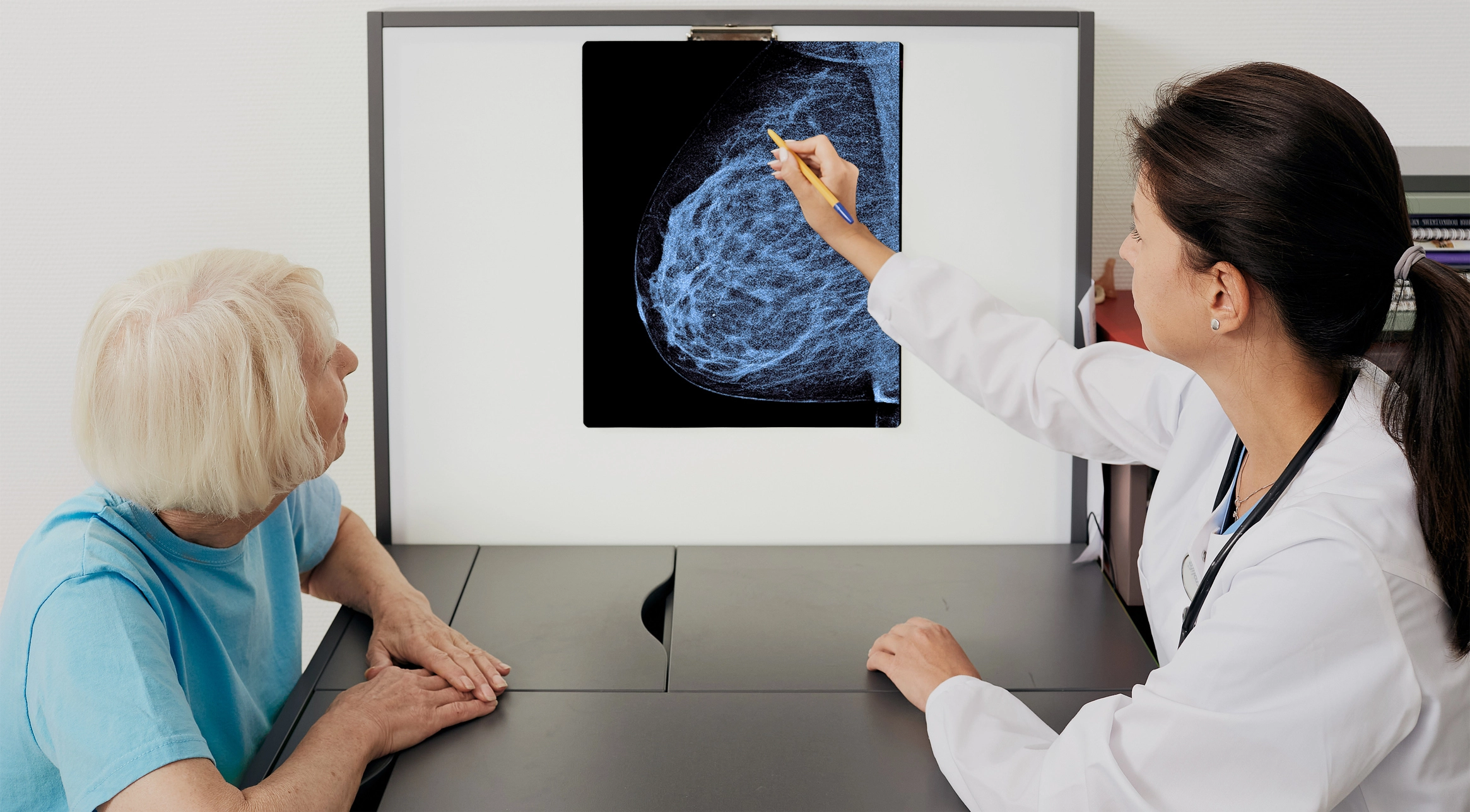
Dense breast tissue can affect how breast cancer appears on a mammogram and may increase breast cancer risk. Learn about breast density, mammogram results, additional screening options, and questions to discuss with your healthcare provider.

Learn about metastatic breast cancer, also known as stage IV breast cancer, including treatment options and clinical trials available through Minnesota Oncology.

Understanding your breast cancer risk can help you make informed decisions about screening and early detection. Learn about risk factors and personalized breast cancer screening options.