
This content is courtesy of Mayo Clinic, the No. 1 hospital in the nation according to U.S. News & World Report. Minnesota Oncology is a member of the Mayo Clinic Care Network. This relationship provides us with access to information, knowledge and expertise from Mayo Clinic.
April is recognized as National Cancer Control Month, dedicated to raising awareness for cancer prevention and treatment.
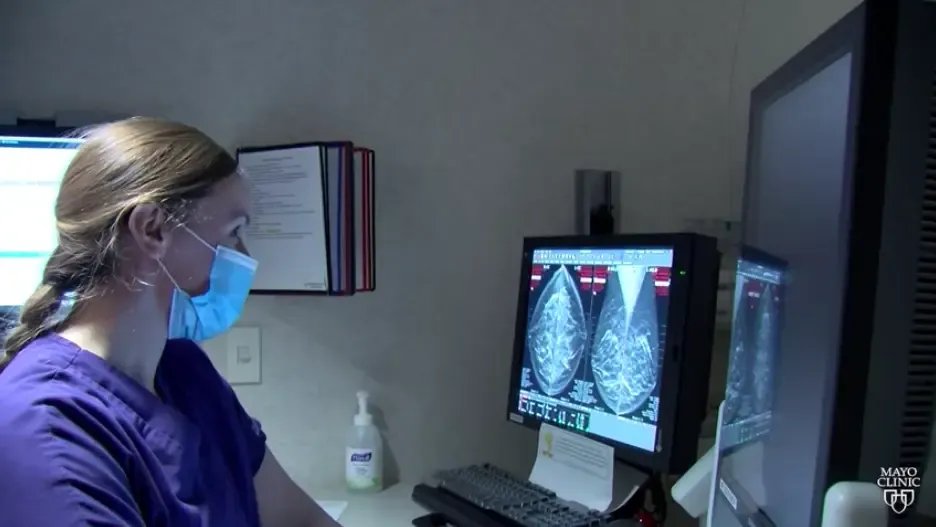
One of the best tools to prevent cancer is regular screening. Dr. Christine Klassen, director of the Mayo Clinic Breast Clinic, says mammograms are a good example.
"Early diagnosis is going to give patients the best outcomes. We know that if a tumor is caught early and it's still contained in the breast, that outcomes are really very good," says Dr. Klassen.
And early diagnosis usually starts with a mammogram.
"Screening mammogram is still our standard recommendation for breast cancer detection. And we do recommend that screening mammograms be done regularly every one to two years," she says.
Mayo Clinic recommends mammograms begin at age 40. And, for patients with dense breasts, Dr. Klassen recommends additional screening.
"There are several options for women who have dense breast tissue to do a little bit additional imaging and help the radiologist really see if there's anything small occurring in the breast."
Dr. Klassen says 1 in 8 women will develop breast cancer in the U.S. And it's important that all have access to regular screening.
"By giving women the opportunity to have that routine screening mammogram on a regular basis, we're going to improve their outcomes."
Share
Categories
Tags
Recent Posts

Learn about metastatic breast cancer, also known as stage IV breast cancer, including treatment options and clinical trials available through Minnesota Oncology.

Understanding your breast cancer risk can help you make informed decisions about screening and early detection. Learn about risk factors and personalized breast cancer screening options.

Learn about the common signs and symptoms of lymphoma and leukemia, including fatigue, swollen lymph nodes, unexplained bruising, frequent infections, fever, and other changes that may warrant medical evaluation.