
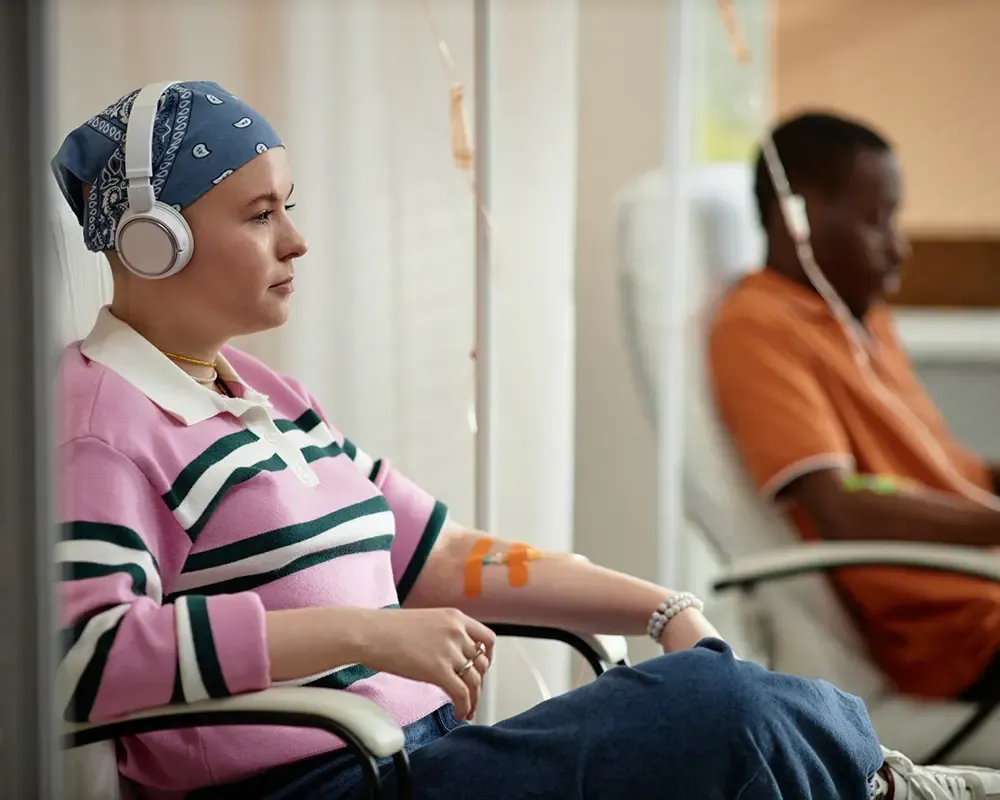
Clinical trials play an important role in advancing cancer care, but many people are unsure about what they are or how they work.
In reality, clinical trials are a key part of how new treatments become available and how care continues to improve for patients today and in the future. Understanding what they are and how they work can help you feel more informed about your options.
What are Clinical Trials?
Clinical trials are research studies designed to evaluate new treatments or improve existing ones. Before any treatment becomes standard, it must go through clinical trials to make sure it is safe and effective.
These studies follow a structured process and are typically divided into phases.
Phase 1: Researchers test a new drug or treatment in a small group of people (20-80) for the first time to evaluate its safety, determine a safe dosage range, and to identify side effects.
Phase 2: The treatment is given to a larger group of people (100-300) to see if it is effective and to further evaluate its safety.
Phase 3: The treatment is given to large groups of people (100s-1,000s) to confirm its effectiveness, monitor side effects, compare it to commonly used treatments and to continue to collect information that will allow the drug or treatment to be used safely.
Phase 4: After a treatment has been approved by the FDA and available to patients, doctors can now prescribe the drug regularly. Ongoing studies continue to monitor its effectiveness in various populations and any side effects associated with long-term use.
Why do Clinical Trials Matter?
Clinical trials are how new treatments and cures are developed. Every treatment used in cancer care today was once tested through clinical trials before becoming widely available.
They also allow providers to continue improving existing treatments, helping to increase effectiveness and improve patient outcomes over time.
How Clinical Trials Support Patient Care
Clinical trials can expand treatment options for patients by providing access to new therapies. In some cases, these treatments may be available through clinical trials before they become standard across the country.
This means patients may have additional options as part of their care, while also contributing to advancements that can benefit future patients.
How Minnesota Oncology Supports Clinical Trials
At Minnesota Oncology, clinical trials are an important part of how we bring new treatment options to our patients. Our team works closely with researchers and oncology experts across the country to identify and offer clinical trials that may be appropriate for each patient.
This approach allows us to bring forward new therapies while continuing to improve care for the communities we serve.
Learn More
If you’re interested in learning more about clinical trials or want to see if you may be eligible, visit our website or speak with your care team to explore your options.
Share
Categories
Tags
Recent Posts

Minnesota Oncology is proud to celebrate 28 physicians recognized as 2026 Top Doctors by Minnesota Monthly. Learn more about this prestigious recognition and the physicians honored for their expertise and dedication to patient care.

Learn seven important facts about prostate cancer, including symptoms, PSA testing, screening, active surveillance and treatment options.

Learn about gynecologic cancer screening options, symptoms to watch for and the importance of knowing your personal risk during Gynecologic Cancer Awareness Month.