
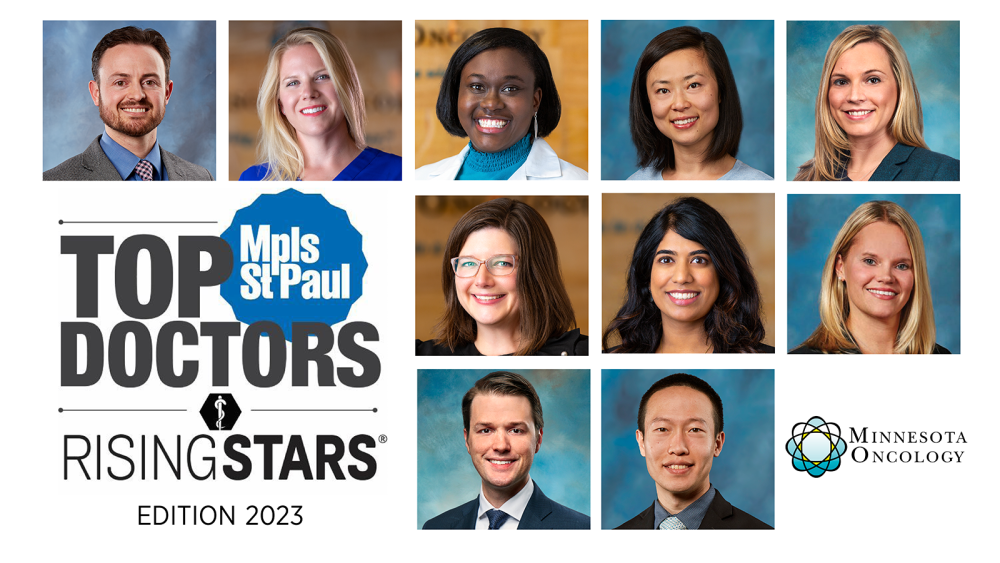
We are proud of our physicians named to Mpls. St.Paul’s Top Doctors Rising Stars 2023 list for providing exceptional care in the community.
This month, the magazine released the 2023 edition of Twin Cities’ Top Doctors—Rising Stars list, which recognizes ten outstanding Minnesota Oncology physicians. To be selected for the list, the doctors must have been practicing for 10 years or less. Each physician named to the list of “Rising Stars” were chosen by peers in the field and are also evaluated on numerous factors including professional achievement, review by an expert panel, research and disciplinary history.
Our selected physicians represent the full circle of comprehensive care we provide at Minnesota Oncology:
Medical Oncology and Hematology, Radiation Oncology, Gynecologic Oncology, Breast Surgery & Palliative Care.
In addition, we also provide thoracic surgery, plastic surgery, genetic counseling, high-risk breast clinic, social work and nutritional services.
As the Twin Cities’ largest and most experienced cancer treatment provider, we know that treating cancer calls for more than compassion. It means giving our patients access to more than 100 cancer care experts, evidence-based treatment paths, close-to-home locations and comprehensive services to support the whole person.
Congratulations to the following 2023 Rising Stars from Minnesota Oncology!
- Ryan Funk, MD, Radiation Oncology
- Lisa Hamilton, MD, FACS, Breast Surgical Oncology
- Shariska Harrington, MD, MSCR, Gynecologic Oncology
- Yang Liu, MD, Medical Oncology & Hematology
- Emily Prendergast, MD, Gynecologic Oncology
- Emily Schafhauser, MD, Palliative Care
- Sushma Tatineni, MD, Medical Oncology & Hematology
- Sara Torgerson, DO, Medical Oncology & Hematology
- Ryan Youland, MD, Radiation Oncology
- Ben Zhang, MD, Medical Oncology & Hematology
Share
Categories
Tags
Recent Posts
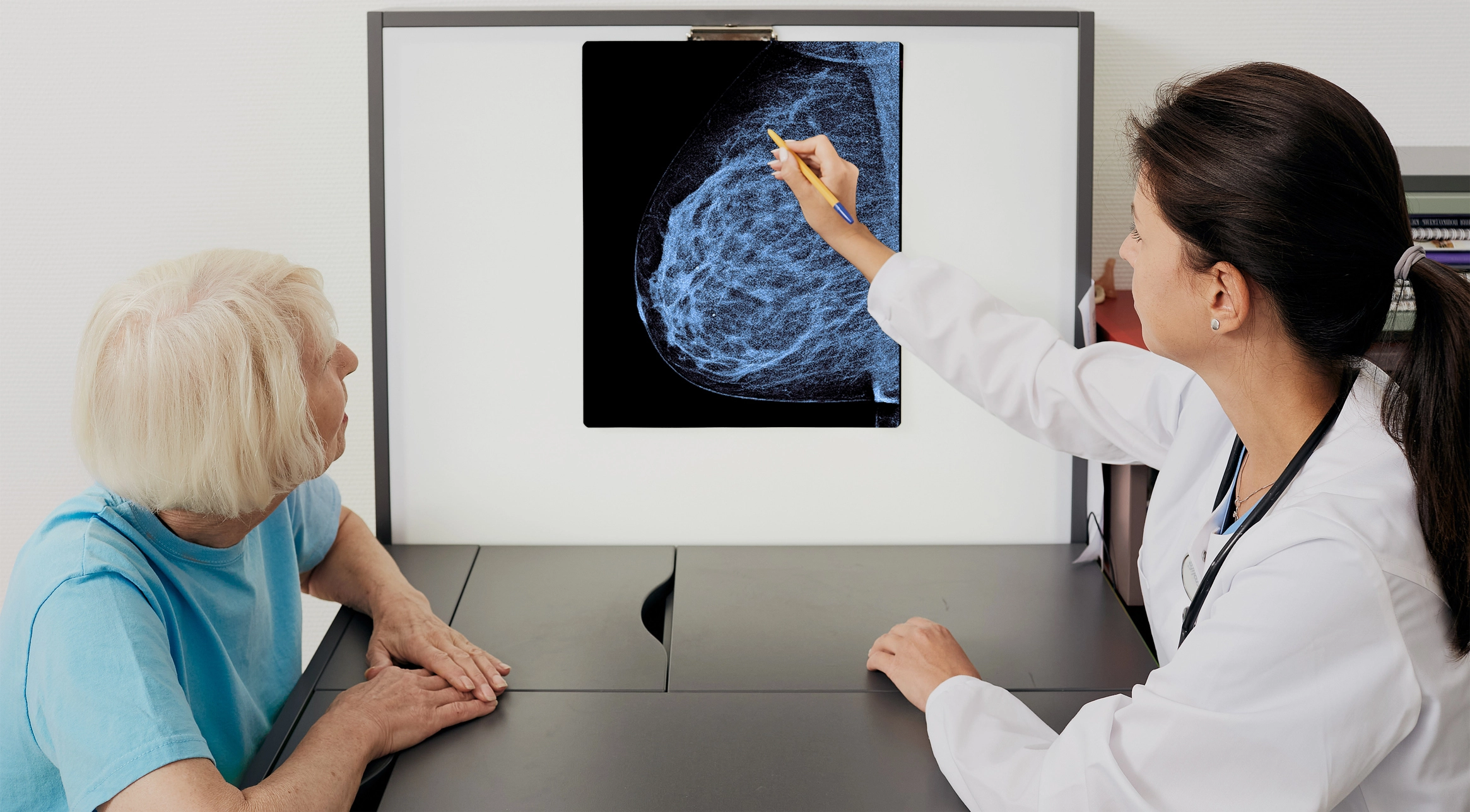
Dense breast tissue can affect how breast cancer appears on a mammogram and may increase breast cancer risk. Learn about breast density, mammogram results, additional screening options, and questions to discuss with your healthcare provider.

Learn about metastatic breast cancer, also known as stage IV breast cancer, including treatment options and clinical trials available through Minnesota Oncology.

Understanding your breast cancer risk can help you make informed decisions about screening and early detection. Learn about risk factors and personalized breast cancer screening options.