
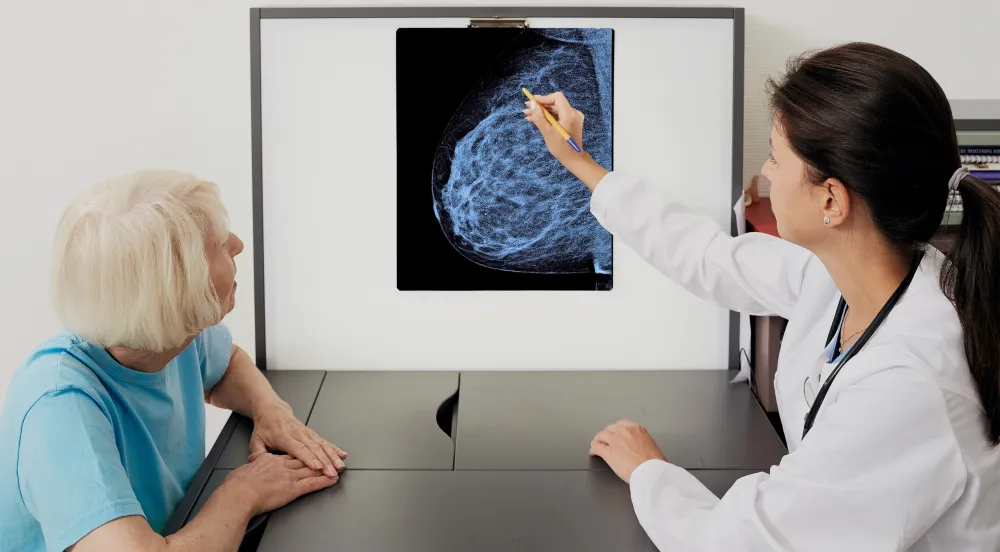
Receiving a mammogram report that says you have dense breasts may leave you wondering what that means for your health. Breast density is a common finding, but it can affect how breast cancer appears on a mammogram and may influence which screening options are appropriate for you.
Understanding your results can help you have a more informed conversation with your healthcare provider about your breast health.
What Does It Mean to Have Dense Breasts?
Breast density refers to the amount of fibrous and glandular tissue compared with fatty tissue in the breasts. It is determined through a mammogram, not by breast size, firmness, or how your breasts look or feel.
Radiologists classify breast density into four categories:
-
Category A: Almost entirely fatty tissue.
-
Category B: Scattered areas of dense tissue.
-
Category C: Heterogeneously dense tissue.
-
Category D: Extremely dense tissue.
Categories C and D are considered dense breasts. Breast density can change over time, and younger women are more likely to have dense breast tissue.
Why Does Breast Density Matter for Mammograms?
Dense breast tissue appears white on a mammogram. Breast masses can also appear white, making some abnormalities more difficult to detect when dense tissue is present.
Dense breast tissue is also associated with an increased risk of developing breast cancer. However, having dense breasts does not mean you will develop breast cancer.
Because breast density is one of several factors that can affect your overall risk, it is important to consider it alongside your personal and family medical history.
Do Dense Breasts Require Additional Screening?
A mammogram remains an important tool for detecting breast cancer, including for women with dense breasts. However, your healthcare provider may recommend additional screening depending on your breast density and overall risk.
Depending on your individual circumstances, additional screening options may include:
-
Three-dimensional (3D) mammography: Provides multiple images of the breast to help improve visualization of breast tissue.
-
Breast ultrasound: May be used to evaluate breast tissue further.
-
Breast MRI: May be recommended for women who meet certain risk criteria.
-
Contrast-enhanced digital mammography: May be considered as another imaging option.
Not everyone with dense breasts needs additional imaging. Your provider can help determine which screening approach is appropriate for you.
What Should You Do After Receiving Your Results?
If your mammogram report identifies dense breast tissue, start by discussing your results with your healthcare provider. Your age, previous breast biopsies, family history of breast or ovarian cancer, hormone use, and other risk factors can help inform your screening recommendations.
Ask whether your breast density changes your overall risk assessment and whether additional screening would be beneficial. Understanding your results and personal risk can help you make informed decisions about your care.
At Minnesota Oncology, our breast care team provides comprehensive breast care, including evaluation and management of dense breast tissue. If you have questions about your breast health or screening options, talk with your healthcare provider about the next steps that are right for you.
Share
Categories
Tags
Recent Posts
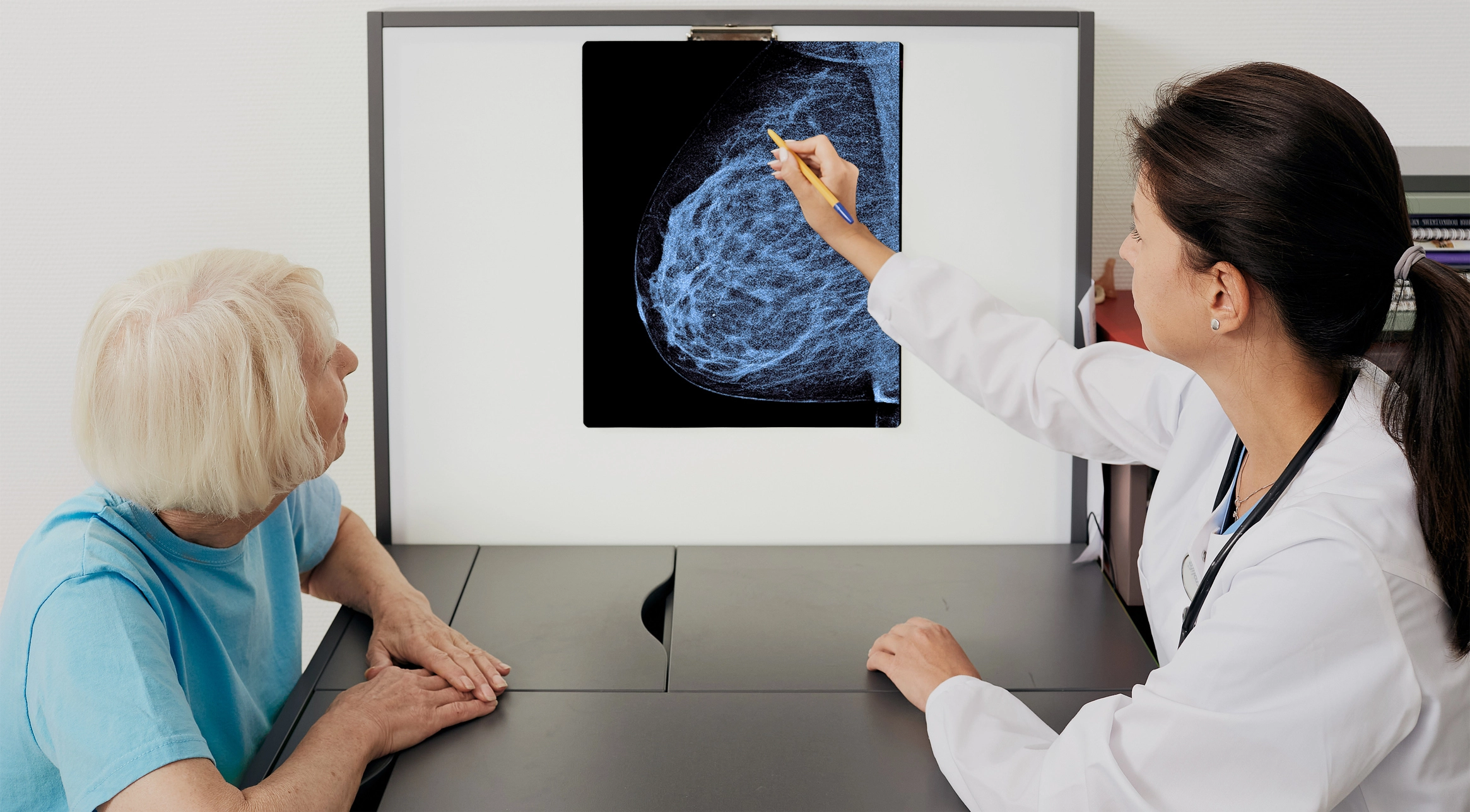
Dense breast tissue can affect how breast cancer appears on a mammogram and may increase breast cancer risk. Learn about breast density, mammogram results, additional screening options, and questions to discuss with your healthcare provider.

Learn about metastatic breast cancer, also known as stage IV breast cancer, including treatment options and clinical trials available through Minnesota Oncology.

Understanding your breast cancer risk can help you make informed decisions about screening and early detection. Learn about risk factors and personalized breast cancer screening options.