
by Dr. Ashlee Turner, Breast Surgical Oncology
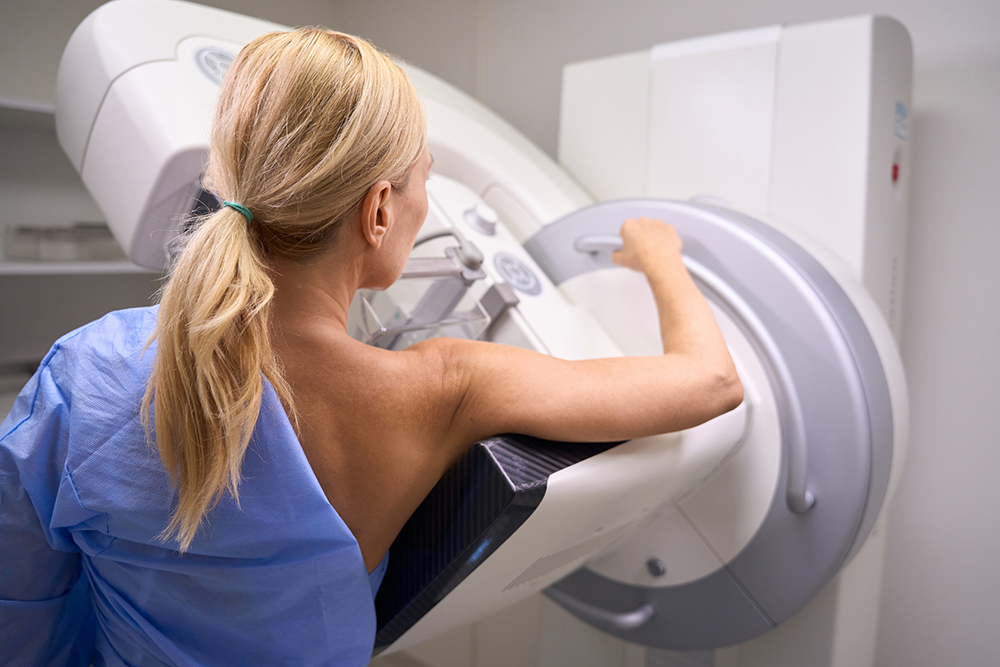
Breast density isn’t related to breast size or firmness and cannot be determined by external look or feel. When you are screened with a mammogram, your radiologist will look at your breast density, which is described by four categories:
- Category A breasts are almost all fatty tissue.
- Category B breasts have scattered areas of dense tissue.
- Category C breasts are made of more dense tissue and are described as heterogeneously dense.
- Category D breasts are extremely dense.
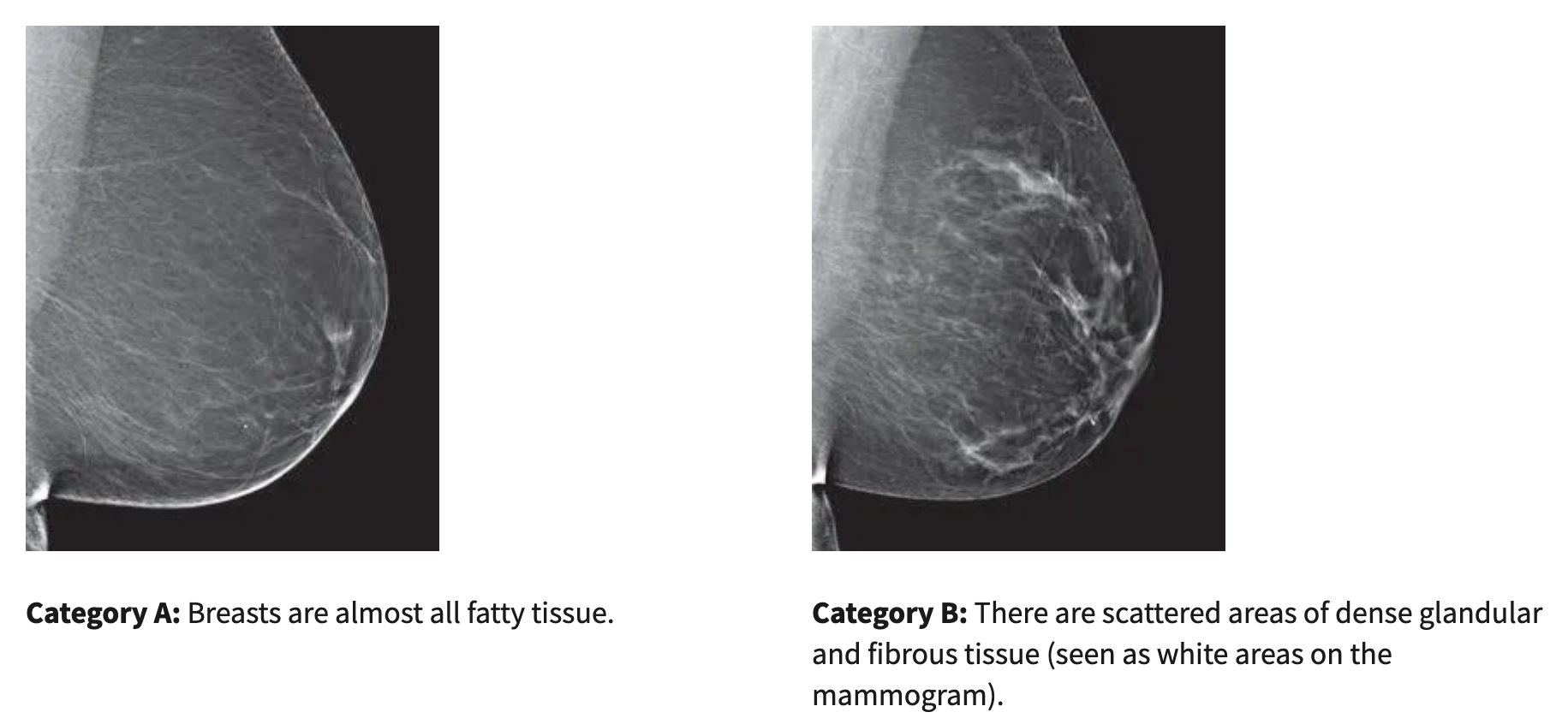
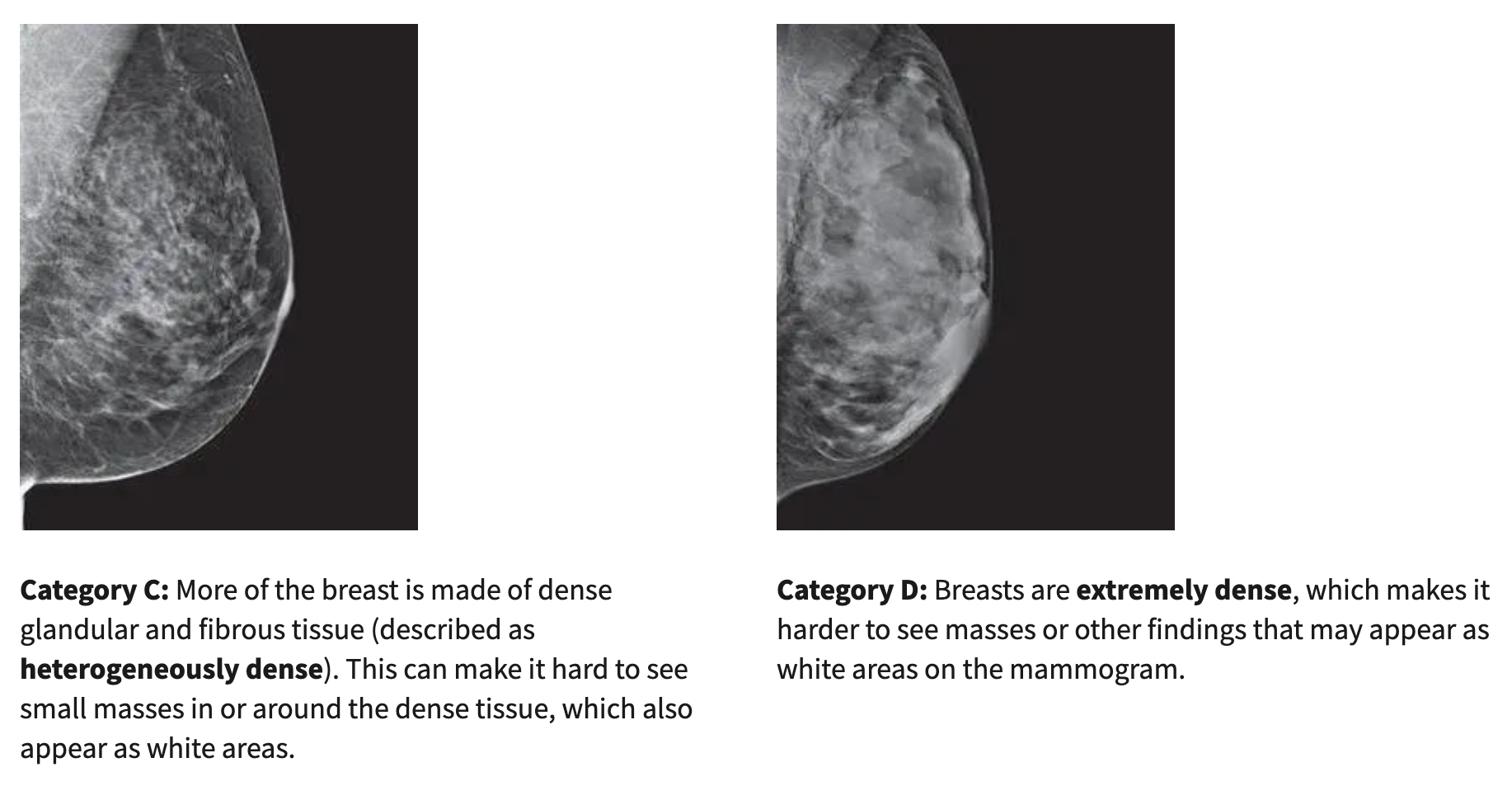
Category C and D breasts are considered dense. The US Food and Drug Administration requires mammogram facilities to include breast density as described by dense or not dense.
How Does Breast Density Affect Cancer Screening?
Fibrous and glandular breast tissue looks white on a mammogram. Because breast masses can also look white on a mammogram, it can be difficult to see them in an image of a dense breast. However, mammograms still detect most cancers in women with dense breasts and those women should still be regularly screened with a mammogram. For some women, additional screening may also be recommended.
If you have already underwent a three-dimensional screening mammogram and have been found to have dense breasts, your physician may also recommend an ultrasound, MRI or contrast-enhanced digital mammography to further improve breast cancer detection.
Why Do You Have Dense Breasts?
There is no known reason why some women have dense breasts and others do not, but those that have dense breast are more likely to:
- Be younger. As we age our breasts tends to become more fatty, however this does not happen to everyone.
- Have a lower BMI. If you have less fat on your body, you are more likely to have less fatty breasts.
- Take hormone replacement therapy. This will help decrease your menopause symptoms but can also lead to increased breast density.
How Breast Density Affects Your Breast Cancer Risk
If your mammogram report says you have dense breast tissue, you may be wondering what that means about your breast cancer risk.
Breast density describes how much fibrous and glandular tissue there is in the breast compared to the amount of fat tissue. Dense breast tissue—less fat tissue and more fibrous and glandular tissue—can make it harder to see cancer on a mammogram. Dense breast tissue may also be linked to a higher risk of developing breast cancer.
Researchers have linked dense breast tissue to a higher risk level of developing breast cancer, but it is unclear why this link exists. If you have dense breasts, it is important to talk to your doctor about your personal risk of getting breast cancer. They will look at any other potential risk factors you may have including:
- Age
- Height and weight
- Any past breast biopsies
- Personal or family history of breast or ovarian cancer
- Hormone use
- Ashkenazi Jewish heritage
- Age of your first menstrual period
- Age when you first gave birth
- Age at menopause
- Age of any other cancer diagnosis
These factors tell your physician whether you are at an average, intermediate or high risk of developing breast cancer. Knowing your risk level can help your physician decide on the most appropriate and beneficial screening for you.
Ask Your Physician About Screening Recommendations
If you have questions about breast cancer screening, your mammogram report, or any risk factors you may have, please consult your physician. They can help you determine the most appropriate screening guidelines for you.
For information about breast cancer treatment at Minnesota Oncology please visit Minnesota Oncology Breast Care Team or call 952.746.6767 to schedule an appointment.
Learn more about Dr. Ashlee Turner
Watch This Video About Breast Density
Share
Categories
Tags
Recent Posts
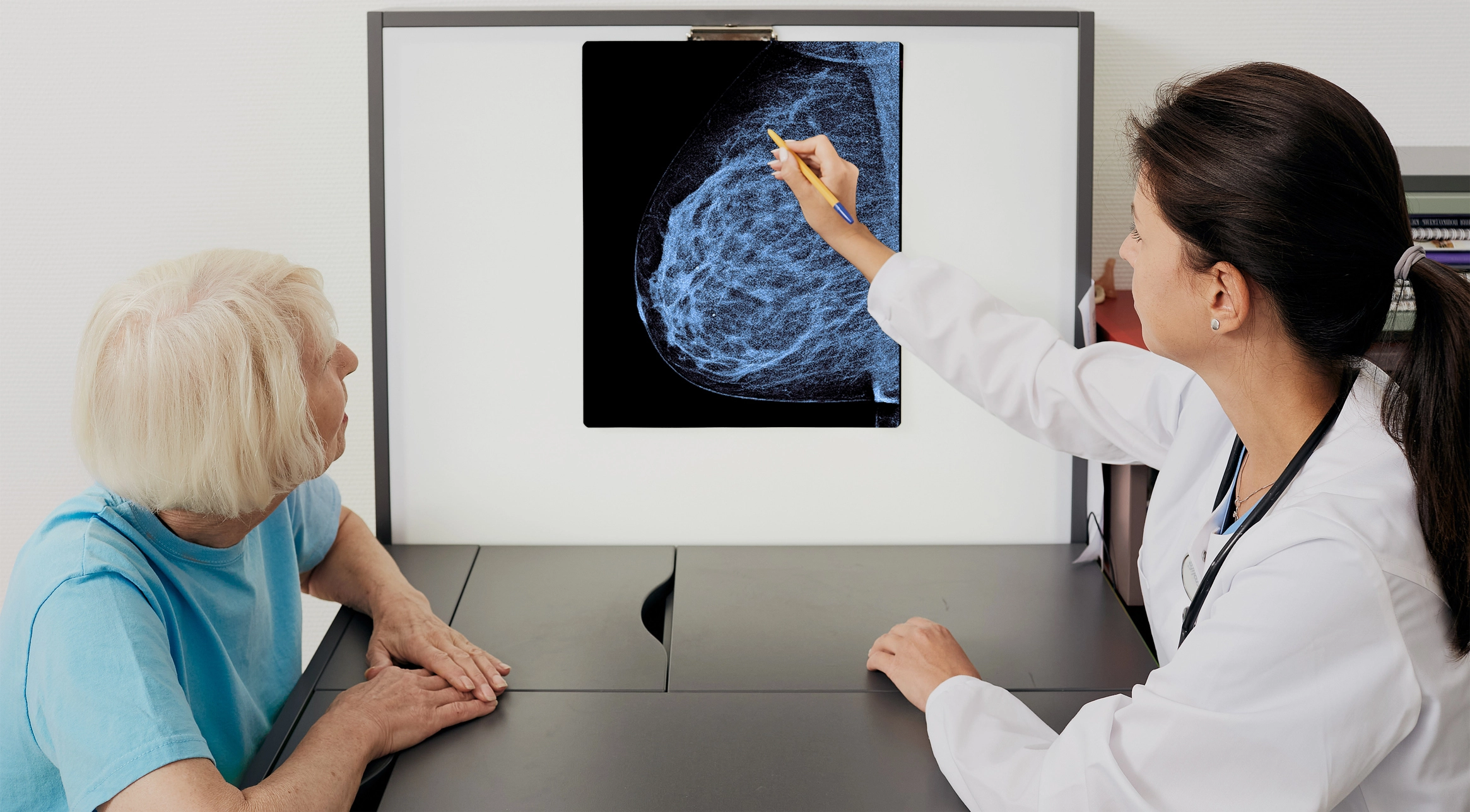
Dense breast tissue can affect how breast cancer appears on a mammogram and may increase breast cancer risk. Learn about breast density, mammogram results, additional screening options, and questions to discuss with your healthcare provider.

Learn about metastatic breast cancer, also known as stage IV breast cancer, including treatment options and clinical trials available through Minnesota Oncology.

Understanding your breast cancer risk can help you make informed decisions about screening and early detection. Learn about risk factors and personalized breast cancer screening options.