
5/28/21
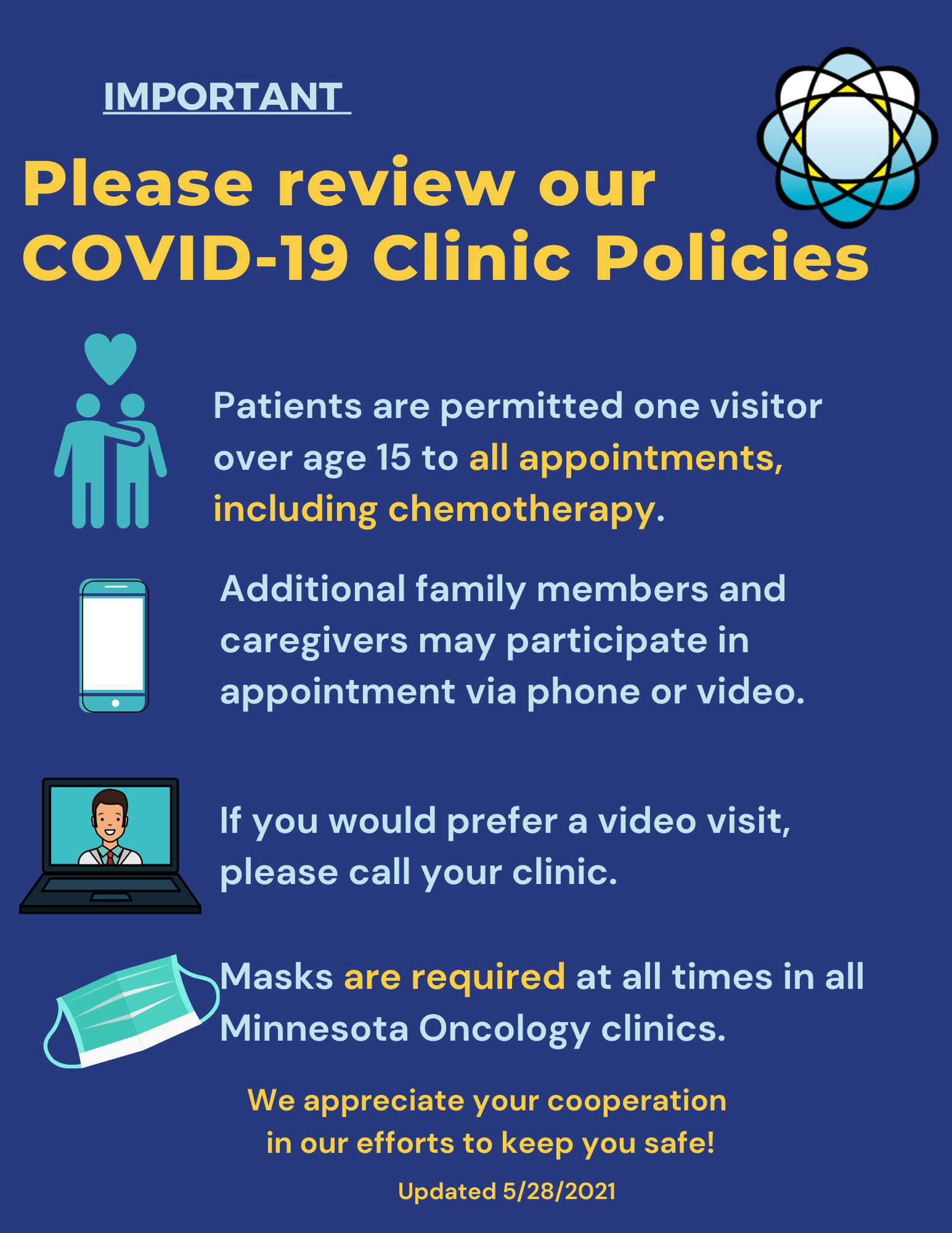 On May 13, 2021, the Centers for Disease Control and Prevention (CDC) revised safety guidelines for those who are fully vaccinated against the coronavirus. The updated guidelines state that fully vaccinated people can resume activities without wearing a mask or physically distancing, except where required by federal, state, local, tribal, or territorial laws, rules, and regulations, including local business and workplace guidance.
Minnesota Oncology has reviewed the new guidelines and beginning June 1, 2021, 1 visitor will be allowed to accompany a patient to all appointments, including chemotherapy appointments. Our current safety guidelines have not changed, and we still require all individuals to wear masks inside all of our facilities.
The CDC continues to recommend that masks and physical distancing are required when going to the doctor’s office, hospitals or long-term care facilities.
Our team continues to follow the protocols as outlined by the CDC and the Minnesota Department of Health (MDH), and we have implemented additional measures:
Require patients and designated visitors to wear masks.
Offer telemedicine visits.
Rigorously clean our offices.
We will continue to evaluate our policy based on CDC, MDH and local municipality guidelines. We will provide updates if we make any changes to our policies.
Thank you for helping us keep our patients, providers, and staff safe. If you have not yet received a COVID-19 vaccine, we encourage you to do so.
Share
Categories
Tags
Recent Posts
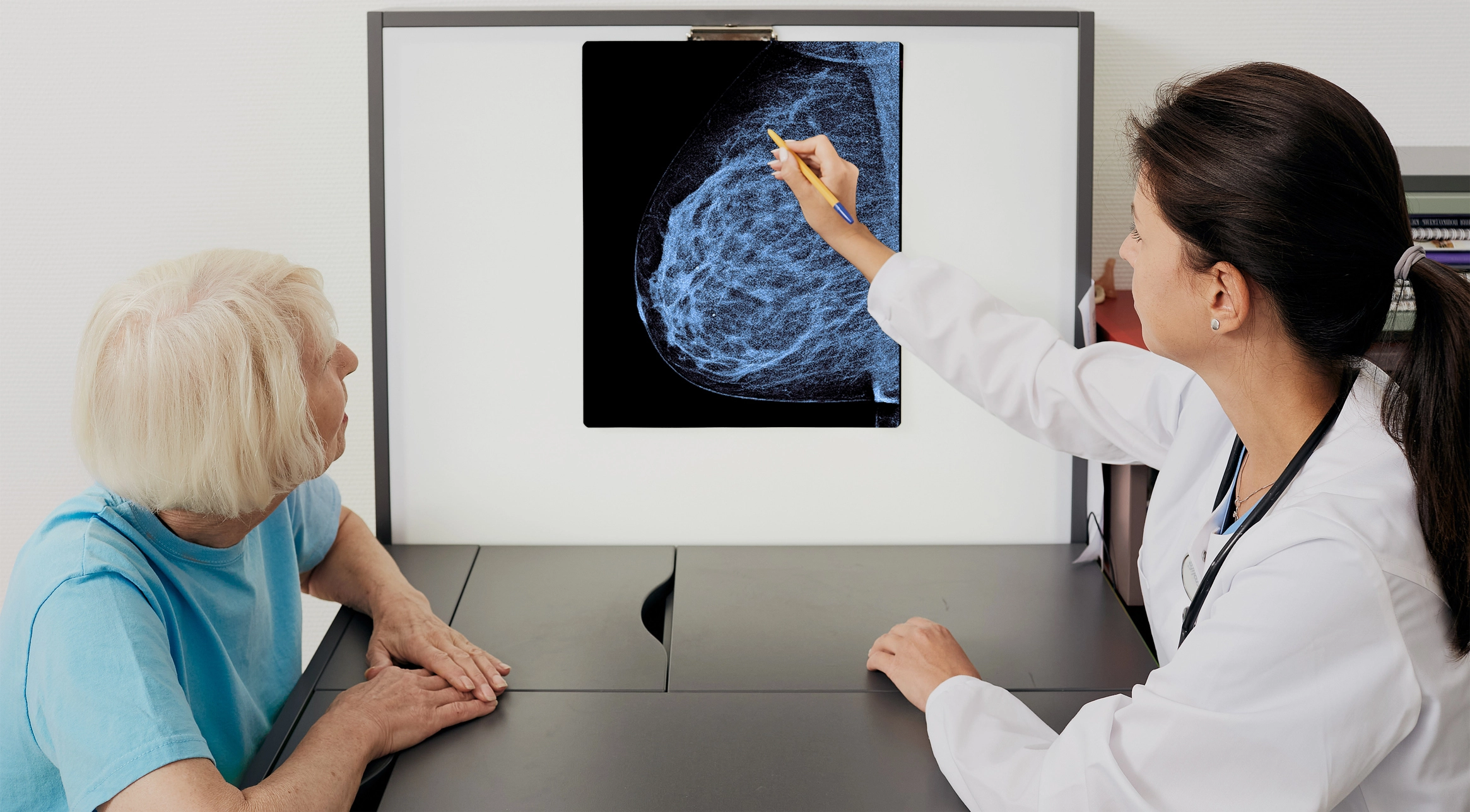
Dense breast tissue can affect how breast cancer appears on a mammogram and may increase breast cancer risk. Learn about breast density, mammogram results, additional screening options, and questions to discuss with your healthcare provider.

Learn about metastatic breast cancer, also known as stage IV breast cancer, including treatment options and clinical trials available through Minnesota Oncology.

Understanding your breast cancer risk can help you make informed decisions about screening and early detection. Learn about risk factors and personalized breast cancer screening options.