
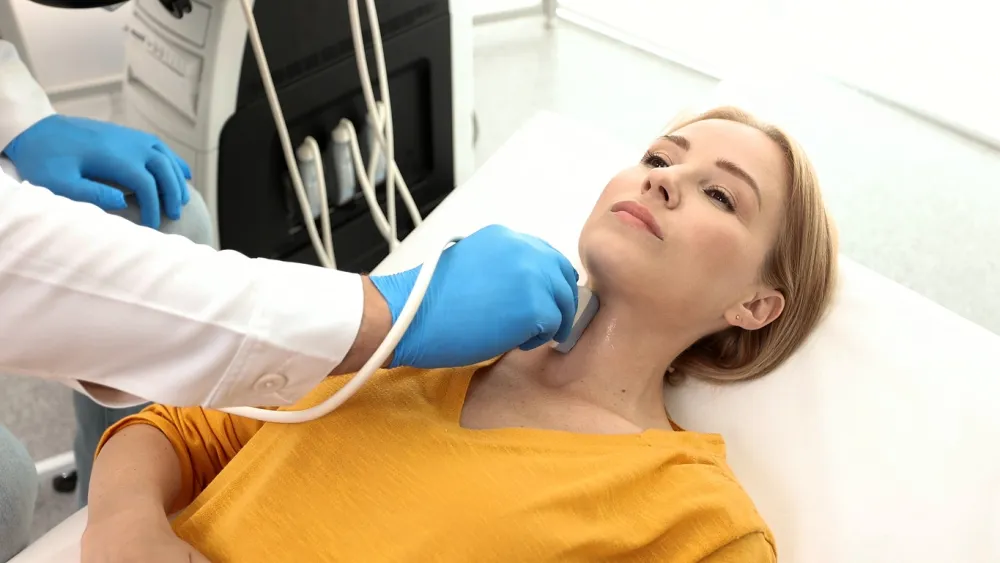
The thyroid is a small gland at the base of the neck that produces hormones that help regulate important functions in the body. Thyroid cancer develops when cancer cells form in the thyroid. There are four main types: papillary, follicular, medullary and anaplastic thyroid cancer. Papillary thyroid cancer is the most common type, accounting for about 80% of thyroid cancers in the United States.
What Are the Signs of Thyroid Cancer?
Thyroid cancer may not cause noticeable symptoms at first. In some cases, it may be discovered during a routine physical exam when a doctor notices a lump or swelling in the neck.
As a tumor grows, symptoms may include:
-
A lump or nodule in the neck
-
Trouble breathing
-
Trouble swallowing
-
Pain when swallowing
-
Hoarseness
These symptoms can have causes other than thyroid cancer. If you notice a persistent or concerning change in your neck, voice, breathing or swallowing, talk with your doctor.
How Is Thyroid Cancer Diagnosed?
If thyroid cancer is suspected, your doctor may begin by reviewing your personal and family medical history and examining your thyroid, neck and nearby lymph nodes.
Additional testing may include blood tests to check thyroid-stimulating hormone (TSH) levels, an ultrasound to examine the size and characteristics of thyroid nodules, or a thyroid scan. A biopsy may also be needed. During a fine-needle aspiration, a thin needle is used to remove a sample of tissue from a thyroid nodule. A pathologist examines the sample for cancer cells.
How Is Thyroid Cancer Treated?
Treatment depends on several factors, including the type of thyroid cancer, the size of the nodule, your age and whether the cancer has spread.
Most people with thyroid cancer have surgery to remove all or part of the thyroid. Depending on the type and stage of cancer, treatment may also include thyroid hormone therapy, radioactive iodine therapy, external radiation therapy or chemotherapy. Some people receive a combination of treatments.
For papillary and follicular thyroid cancers, radioactive iodine may be used after surgery to destroy remaining thyroid cancer cells. After thyroid surgery or radioactive iodine treatment, patients may need thyroid hormone replacement medication.
Learn more about thyroid cancer and treatment options at Minnesota Oncology.
Share
Categories
Tags
Recent Posts
Learn about thyroid cancer, including common signs and symptoms, risk factors, and treatment options. Learn when to talk with your doctor about concerning symptoms.

Julie Sowles shares her journey with Stage IV endometrial cancer, from her initial diagnosis and intensive treatment to recurrence and participation in clinical trials. With the support of her family and care team at Minnesota Oncology, Julie continues exploring new treatment options and looking toward the future with hope.

Learn how inherited genetic factors and family history may affect your risk of ovarian cancer, including the role of BRCA1, BRCA2, and Lynch syndrome, and when genetic counseling or testing may be recommended.